There are many ways to create compost, but if you want it to go fast and at the same time raise the temperature enough to kill pests, diseases and weed seeds, this method is perfect. The 18-day method can also reduce the amount of organic material that oxidizes and disappears as climate-damaging carbon dioxide or methane and the pile is more or less as large when it is finished as when it is first laid. So more compost for you, and less climate impact at the same time. But it’s a little more laborious however but in this article we tell you how it works step by step.
The Berkeley method – Compost in 18 days
Think about this:
With this method, you can get ready-made compost in 2-3 weeks, but there are some important things to keep in mind for everything to work well.
- The pile must be at least 1 cubic meter in size, preferably 1-1.5 cubic meters
- The pile should be turned every other day from day 4 to day 18.
- Carbon-rich materials such as leaves, branches and other “brown” materials should be finely chopped, to decompose properly. Feel free to use a compost grinder or similar.
- Cover the compost with a tarp or something that hinders it from becoming to dry or too wet. Make sure that the right moisture is maintained, it should be around 50-60% moisture.
In the following video from Geoff Lawton, you can learn more about the different materials to use when composting:
How to create a hot compost in 18 days
Step 1:
Gather the material
- Gather all the materials you need. Strive to have a carbon-nitrogen ratio of between 25: 1 and 30: 1. See the video above for further explanation.
- The compost is ideally built from about 1/3 “green material” (ie fresh grass clippings, plants or green leaves), 1/3 manure (preferably fresh manure) and 1/3 “brown material” (leaves, dried plant parts and branches – preferably chopped)
- Lay everything in 3 piles and pull a water hose to the site to be able to water constantly when you build the compost.
Step 2:
Build the compost pile
- Build the compost by laying out a layer from each pile as when making a lasagna.
- You do not need a frame or compost grid around the compost is laid properly.
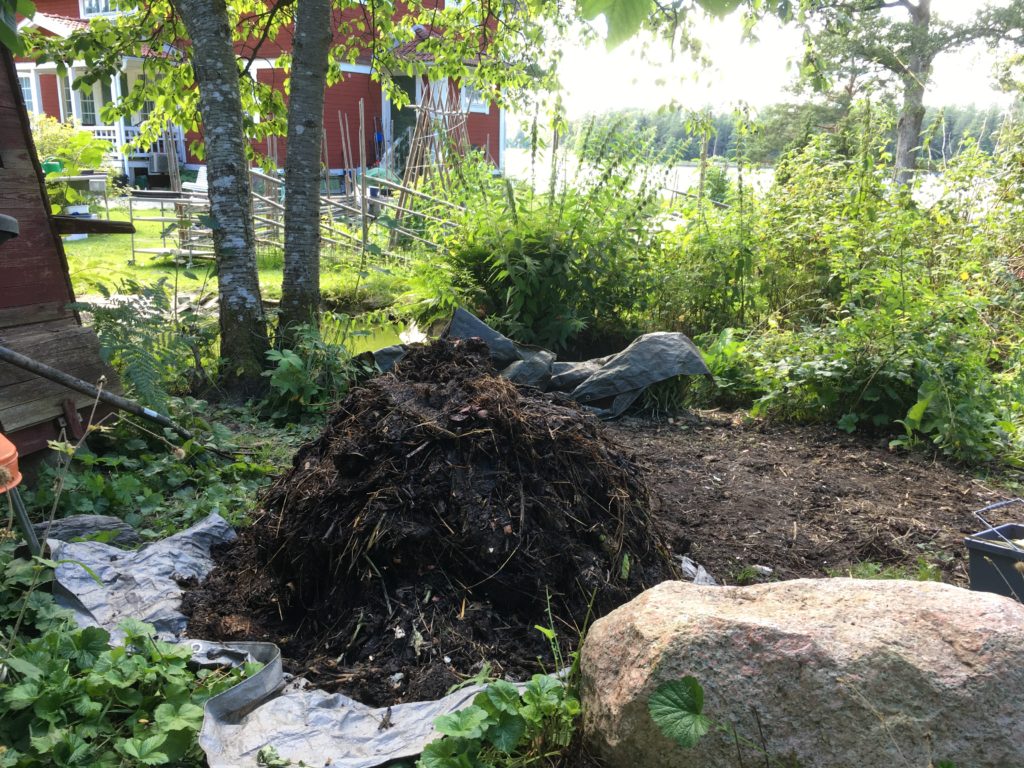
- Try to make the diameter of the compost around 1 meter and the height preferably 1-1.5 meters.
- Cover the compost with a tarpaulin and place a compost thermometer in the middle to keep track of the heat.
- You can also use an activator in the middle of the compost, e.g. comfrey, dead animals, etc.
Step 3:
Turn the compost regularly and monitor the heat
- Make sure that the compost is at least 55 degrees C. When the pile reaches a temperature of 60-65 degrees, it is time to turn it so that it does not burn / oxidize too much.
- After 4 days, the compost has usually reached temperature and it is time for the first turn. Prepare space so that the entire compost can be moved to the surface next to where it now stands and move from top to bottom with a handle or similar.
- Turn the compost “inside out”: When you turn the compost, you feel that it is warmer in the middle and colder on the sides and you can advantageously place the cool pieces in the middle of the new pile and the warm ones at the outside. Water if necessary to get the right moisture. You can test by squeezing the soil and it should only drip one drop.
- Then turn it over every other day, ie days 6, 8, 10, 12, 14 and 16.
On days 6-8, the pile usually reaches its highest temperature and then gradually decreases.
After 18-21 days, you should have a finished compost that is black and lukewarm – and filled with nutrients and micro-life.
If everything went right, it should be about the same size as when you built it.
More tips can be found in this video in English with Richard Perkins who also wrote about the method in his book Making Small Farms Work.
My compost does not get hot, what could have gone wrong?
If your compost does not get hot, you should check this:
- Was the pile large enough, ie. at least 1-1.5 cubic meters?
- Was it the right moisture content? Or is the compost too dry or too wet?
- Is your brown material finely chopped?
If all this seems ok and you have not come up in heat, it is probably due to the lack of nitrogen in the compost. So you need more nitrogen-rich material. Try mixing in manure and maybe even urine. Wait two days and see what happens.
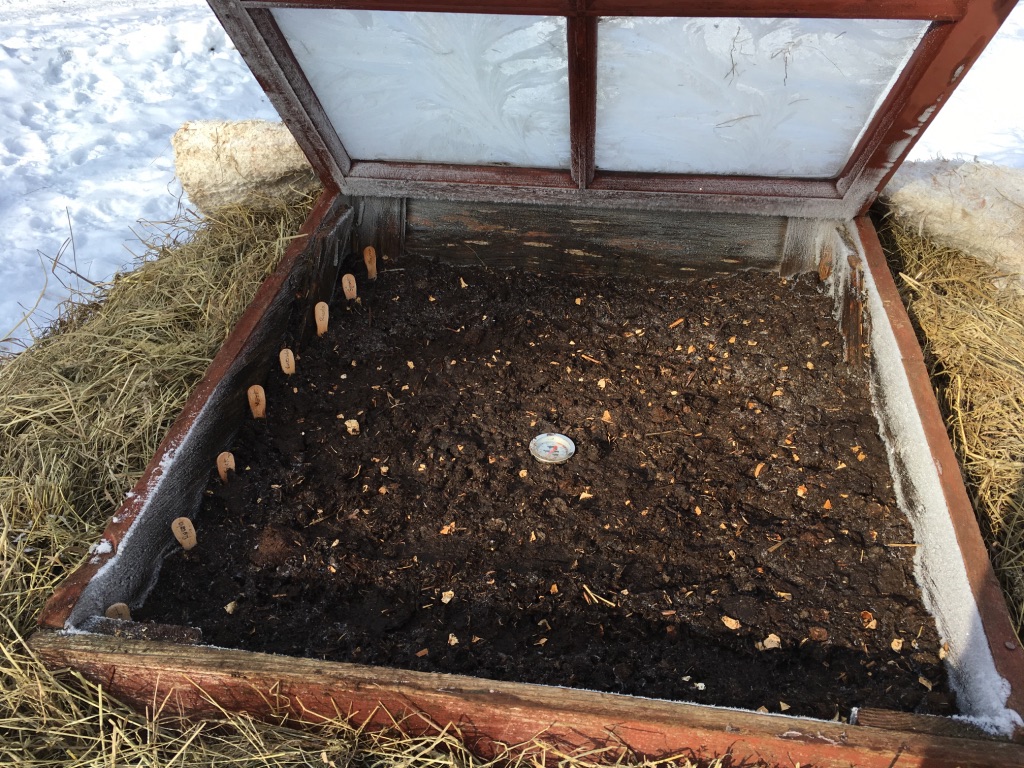
PS: Maybe you are also eager to use the heat from the composting to extend the season? Check out our article on building a hot bench, where you can use the burning compost / manure to start the growing season several months earlier. Read the article on how to build a hot bench here.
Good luck with your hot composting!
Let us know how it goes and tag Grow Here and use the hashtag #DreamsGrowHere when you share photos of your hot compost!
Sources:
Making Small Farms Work – Richard Perkins, 2016
Geoff Lawton – 2019
Warm greetings,
Jonathan and the Grow Here team