Companion planting: Did you know that by growing several types of crops on the same area, you can both increase the harvest per square meter and protect certain plants from pest infestation ..? There are many tips out there for what is suitable to grow together and which contradict each other. By learning the principles behind many of these tips, you can create for yourself an idea of what works for you. In this article, we delve into which plants thrive together and how you can increase the harvest and reduce pests. Learn 5 principles so you can create your own co-planting combinations. In addition, you get several concrete tips on what works to grow together in terms of vegetables, fruit trees and perennial berries. Enjoy reading!

High summer is here and this week we focus on how to co-plant different plants – to get more out of your cultivation area.
There is a lot written about companion planting, but unfortunately there is no extensive research on the subject and much of the tips are based on practical knowledge and experience that has been passed on from generation to generation. But you can learn a lot by looking at how different crops grow together in nature and here is a summary of the five principles that we will explore in this article.
5 principles for successful companion planting:
- Combine non-competing crops with different root depths and growing methods
- Keep distance between plants that do not thrive together
- Grow a variety of herbs and flowers (among the vegetables) to attract useful animals
- Fast growing can fill gaps between slow growing
- Grow a catch crop that the pests prefer to go on
In this video you will hear some tips about plants that are said to thrive together and protect each other from pests and we highlight some concrete examples that can also be read more about later in the article.
Principle 1: Combine crops that complement each other
In nature, a plant rarely grows alone in a large field as in today’s large-scale monocultures (a crop on large areas). Instead, plants that do not compete in the same niche, but complement each other, have formed a kind of ecosystem in mini format – in some contexts, these plant combinations are called “guilds”. Some plants climb, others have deep roots and absorb nutrients, some have shallow roots but are good at covering the ground, others fix nitrogen that becomes available in the soil for more plants.
An example is the three sisters (a combination of three vegetables that the Native Americans used to grow together) where the squash covers the ground and prevents weeds and dehydration of the soil, the maize’s tall stem acts as plant support for the beans which also fixes nitrogen for both the squash and the maize that need a lot of nutrition.
These principles can be used on both a smaller and larger scale. In Agroforestry, one cultivates e.g. rows of trees with fruit or nuts every 10-20 meters with vegetables or cereals in between – where the harvest for the vegetables and cereals is equal or greater per hectare plus you can also harvest fruit and nuts in the long run. The roots of the trees prevent erosion, the branch becomes a windbreak and “mycorrhiza” – a network of underground mycelium fungi that thrive among trees and forest land – can help spread water and nutrients between vegetables / grains and the roots of the trees. If you want to read more about imitating the forest ecosystem, we suggest the book Edible Forest Gardens by Dave Jack & Eric Toensmeijer.

Try this principle in your garden! Try it out, maybe Sunflower and other plants with strong stems can also act as support for climbing plants, maybe you can combine vegetables with different root depths to maximize your cultivation area – or even grow ground-covering plants such as clover that also binds nitrogen between your tall ones. Here are all the tips in a summary list:
- Combine vegetables with different growing methods:
- Three sisters – Corn, squash and beans: Combines ground cover, tall and climbing
- Agroforestry: Tree rows between vegetable plantations
- Nitrogen-fixing plants can reduce fertilizer requirements
- Combine vegetables with different root depths!
- Carrot and Onion / Lettuce:
The carrot’s tap roots do not compete with onions and the salad’s shallower roots. - Beets and Kohlrabi:
The beetroot’s deeper roots take the nutrients deeper than the kohlrabi’s shallow roots. - Grow deep-rooted perennials / herbs by your apple tree;
For example. lemon balm or comfrey which both help the shallower root system of apple trees to gain access to nutrients!
- Carrot and Onion / Lettuce:

Principle 2: Keep distance between plants that do not thrive together
Most tips on co-planting are not just about what can be combined but what you should avoid combining. But what is the reason for this? Well, some plants easily get the same diseases, as they are part of the same family. For example. Potatoes and tomatoes. These should be kept at a good distance from each other. The same applies to certain plants that belong to the same plant family – especially perennial plants that remain in the same place year after year – such as Roses, Raspberries and Apples and Strawberries that belong to the Rosacea family.
If you are planting an orchard or an edible forest garden, this is even more important. In these contexts, efforts are usually made to grow a variety of different plant families and to spread closely related plants even in perennial crops – such as in the edible forest garden which tries to mimic the forest edge ecosystem, but fill it with useful plants and edible goodies. Learn the families of the plants, and spread related plants as much as you can.
Even completely different plants are said to affect each other negatively. For example. bulbs and legumes that according to co-planting books such as (Carrots Love Tomatoes) and growers’ practical cultivation experiences do not thrive together. Another example among trees is walnut trees where very few plants are able to grow under. This can also be used if you want to avoid weeds.
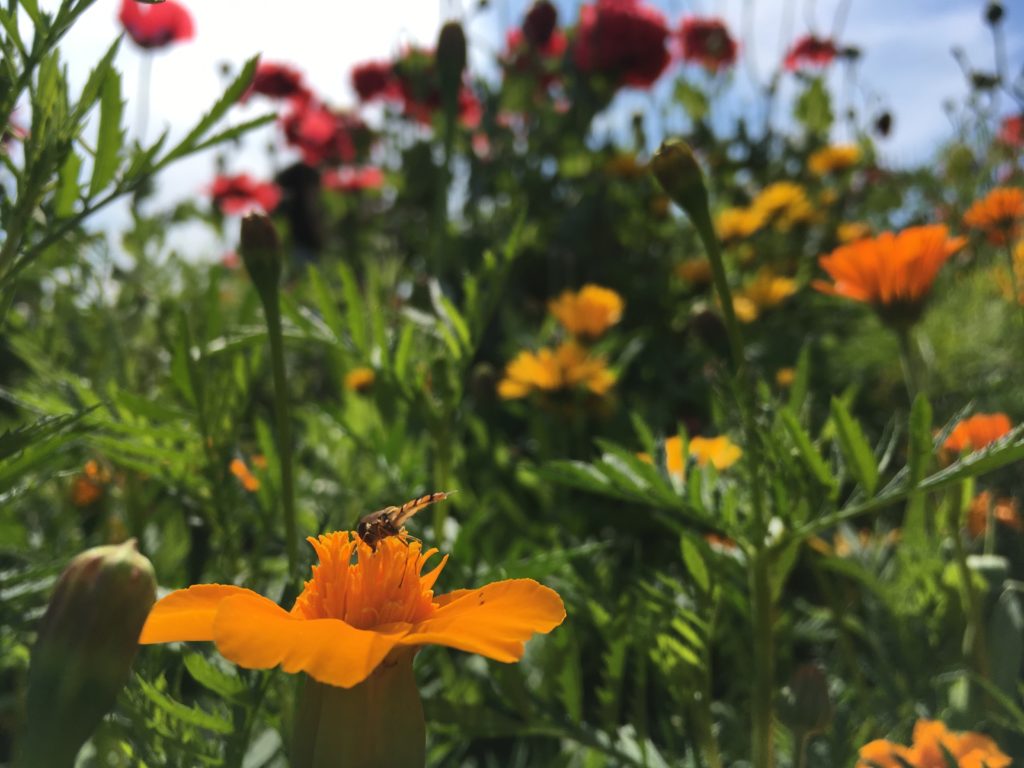
Principle 3: Grow herbs and flowers that attract useful animals
Your best weapon to prevent pests is to attract a lot of beneficial animals that eat these pests. Many flowers and herbs provide food and create a nice habitat for the predators in the insect world that eat problematic pests. Here are some examples:
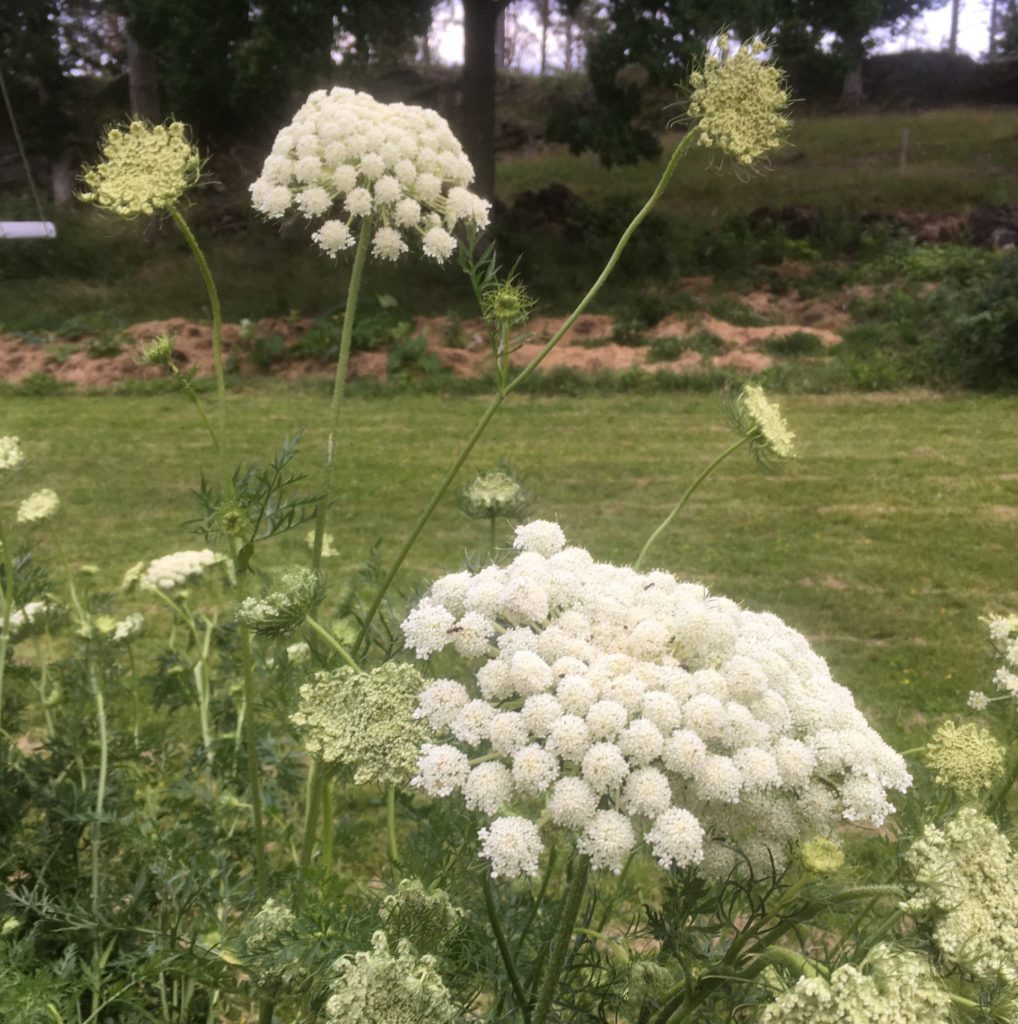
Good herbs and flowers for co-planting!
- Thyme + Cabbage: Thyme is owned to attract pollinators and predatory mites and keep the cabbage worm away. Aromatic herbs in general, such as rosemary, salvia, etc., are also said to repel the cabbage butterfly’s larvae. (according to FOBO, Hemmaodlat, etc)
- Coriander + Peas / Chili: Coriander is said to attract ladybugs that eat aphids, as well as fennel and dill (Hemmaodlat). Therefore, Coriander can be excellent to grow with your peas, broad beans, eggplant or chili that are often attacked by aphids. Read more below about the group of flock-flowering plants that can also attract other useful animals.
- Potatoes/Tomatoes + Tagetes: A beautiful edible flower plant that is said to scare away dangerous nematodes (underground roundworms) that can cause soil fatigue, and a vicious spiral of plant diseases and problems. For best effect, you should grow tagetes one year before growing e.g. potatoes – but can also be planted nicely among your tomatoes, roses or other plants that are easily attacked. (Sandskär, 2019) Marigold and Salvia are also said to be good against nematodes (Gustavsson, 2012).
- Squash + Nasturtium: Nasturtium, sometimes it is called “indian cress” or “monks cress” (“Tropaleum Majus” in latin) and its peppery edible stems and leaves are not only good but are believed to be good companions for cucumbers and squash as it is said to keep away “cucumber beetles”, and form a good habitat for spiders and earth runners who eat many pests. (Cunningham 2000)
Image: Ground beetle - Apiaceae plants – a family of plants that includes as carrot, parsley, cilantro, cilantro, yarrow etc – whose flower looks are small like cow parsley) – but also Asteraceae plants (with bigger flowers such as marigold, dandelion, cornflower m.fl.) are said to attract many pollinators who also often eat pests, such as wasps and hover flies. The hover fly is said e.g. be able to eat 100 lice in one day.(Elmberg, 2020)
PS: Leave some weeds behind!
Some flowers and herbs grow naturally as weeds in your country and may indicate a deficiency or imbalance, and of course these can also in many cases attract useful animals. Here is an example:
Yarrow is said to attract butterflies, deter lice, bloodsuckers and spin mites and add potassium to the soil. According to some research, yarrow can assimilate potassium from the soil in a way that no other plant can and in the long run the soil will be richer in potassium. (Gustavsson, 2012).
Principle 4: Fill gaps between slow-growing crops
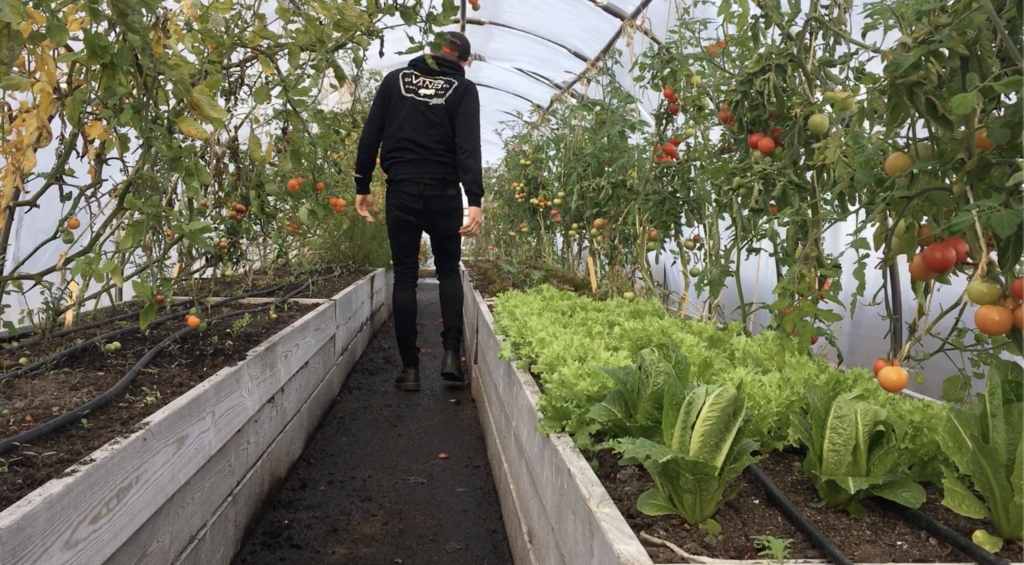
Do you grow e.g. strawberries that take 1-2 years to grow and give a lot of harvest? Maybe you think there is a bit of a void between squash, cabbage, tomato and chard, before they spread out properly? Why not grow a fast-growing crop in between that fills the gap and is ready-harvested just in time for the main crop to have grown large and needs all the space itself.
Here are my tips on replanting to fill time gaps:
- Fast-growing cabbage leaves (like ruccula, red russian kale etc) in the rows next to cabbage & tomatoes or radishes around squash.
- Spinach in the rows between my chard, which is harvested completely when the chard has grown big enough and needs all the space.
- Lettuce between the rows of onions, which are harvested when the onion has grown, the roots do not compete.
- Spinach and other annual vegetables among my young strawberry plants.

Principle 5: Grow a catch crop that the pests prefers
A prime example is napa cabbage, arugula (rucula) and other fast-growing cabbage varieties – which seem to be even tastier for many of the pests compared to eating on cabbage leaves. Some people therefore grow napa cabbage some distance away from the slower growing cabbage to attract the pests there (away from your main crop), or right next to them to walk on these leaves instead of the slow-growing cabbage leaves that you don’t want to be eaten by pests. It is also said that you can jerusalem artichokes that are loved by the field voles (that often eat lots of vegetables, especially root crops). Personally I am a little unsure if I want to attract the feed sork to the garden in this way, but if you already have them it might be worthwhile.
Craving for more tips?
Here are some of the sources (in Swedish) we used in the article for you who want to dive even deeper:
- F.ex. FOBO and Hemmaodlat has compiled a list of different combinations of plants and herbs, här you can also read about their tips against aphids.
- Emma Gustavsson writes about many exciting co-planting tips in the magazine Allt om Trädgård, with interviews with several well-known growers about their best co-planting tips.
- Read more about Nematodes at SLU‘s website and read how the so-called Soil fatigue can be avoided by building up the soil here.
- Read about Sara Bäckmo’s thoughts on co-planting here.
Interestingly enough, Sara Bäckmo criticizes the combo of carrots and onions / lettuce which she thinks grows too strong and shadows out the onion. Personally I have tried harvesting lettuce quite heavily and then putting in parsley in between, which can then be kept down in growth.
Book tips:
Wishing you a great garden year,
Jonathan Naraine
The Grow Here team